Showing posts with label artist as family. Show all posts

Saturday, 11 November 2017

The post-supermarket homefront (nearly a decade on)

Hello spring! What a flowering we've had this year! So much fruit set. Yippee!!

Some of our activities in the garden at this time of year include picking off the cabbage moth larvae to feed to the chooks (thanks Meg!), feeding weed tea to the onions (thanks Woody!), and cutting off the frost burnt leaves on the potatoes (thanks Patrick!).


All our produce ends up in the kitchen and much lands on the fermenting table, which is Meg's shrine to our household's health. We call this the Pandoran hub of the house, after Pandora, known since early Greece as the goddess of fermentation, hope and insight – who Patrick calls, in his latest book, the healing goddess of the underworld of our gut. The gut is where 90% of serotonin and 50% of dopamine is produced in our body. These are the happy chemicals essential for a good life. Give the body microbiome-killing industrial food and medicine and you have a significant problem, individually and culturally.


Here's an example of Pandora's goodly alchemistry performed by Meg. In this homemade apple cider vinegar made last autumn there are many beneficial herbs and weeds from the garden including: rosemary, coriander, dandelion, plantain, mallow, horseradish leaf, lemon thyme, calendula, hawthorn berries, rosehips, parsley and sheep sorrel. You can look up the benefits of each of these plants using that old thing, the Internet. Be sure to cross reference and go to peer reviewed papers if they exist. Otherwise trust your gut. She knows. Each plant contains vital minerals and nutrients, and the vinegar helps extract the minerals otherwise locked up. We use a little of this brew each time in salad dressings.


Meg's raw milk cheeses are another form of wild fermented goodness. We don't eat much animal protein, but adding this contraband local material into the mix of our life certainly adds a cow-kick punch to our week. Thank you gentle creatures of field and herb.


At this time of the year the cellar is becoming depleted, but there's still something delicious to find on each journey into this other Pandoran underworld. Bottles such as our former SWAP, Marta's Polish pears, or our dried plums, toms and citrus, or Meg's raw wild fermented soft cheese balls preserved in olive oil with herbs.


So many of the processes and activities we carry out each day offer an array of learning moments, but play is equally as important.


If Woody wants to jump on the trampoline he does so, but fairly soon he'll come over and say, "Can I have a job." Sun drying herbs is probably not a labour that takes his fancy, so he'll probably opt for the trampoline before lunchtime.


Speaking of which. Lunch is probably our favourite meal. A typical lunch? Patrick's wild and slow fermented 100% spelt sourdough with sprouted lentils, Meg's veggie spread (tahini, miso paste, olive oil, lemon juice, crushed garlic), her famous three-cornered garlic kraut, and her semi-hard raw milk, wild fermented cheese. Fit for any aspiring neopeasant. Yes, we know, this is all sounding so Portlandia. For a laugh we call it Daylesfordia, but the radicalism of how we live is not to be scoffed at. Just try us. We do all this well below the poverty line, and while our agency springs from two generations of privilege, the future for us is found in emulating the ecological intelligences of our peasant and indigenous ancestors. We make the bold gut claim that if everyone in the West lived with similar simple nourishment and low carbon lifeways we'd seriously mitigate the effects of climate change, obliterate pollution and species extinction and reduce many human health pathologies produced by unchecked modernity. Yes, it's a big claim, and too big to go further into here, but we will happily chew your ear off, lock horns or swap knowledges with you if that's your thing... Warning: trolls will be composted. Mmmm. Time for lunch.


This spring Patrick has built the outdoor kitchen in time for summer. Here he checks that the bread tins fit in the oven below.


Patrick has also just finished the greenhouse, with the help this year of SWAPs Connor, Marta and Jeremy. The suspended worm farm that sits under the bench catches all the drips and keeps the worms moist and happy. It's really great having the worms so close to the kitchen. Scraps are either thrown out the window to the chooks or given to the worms. Gravity fed everything!


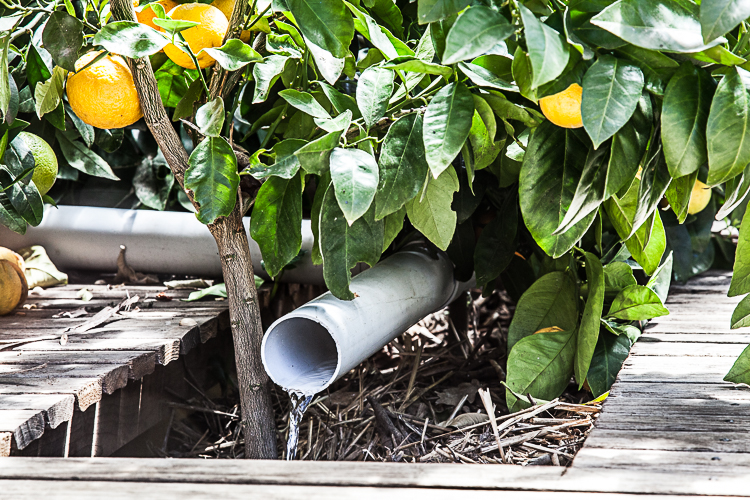
Water recycling has also required a lot of thinking this year, and as a result we are 100% water off-grid. All waste water is now directed into the garden at multiple points, gravity fed.

We continue our commitment to car-free living, although of late we've had to borrow a car here and there to go look for our gut-damaged teen Zeph and his best friend, trouble. Zeph's rebellion has been to eat toxic corporatised food and drink. The inflammatory results have been startling, and extremely unsettling. Collecting wood on foot and on bikes, never over-harvesting but taking fire-prone buildups of fallen branches keeps us fit and healthy, and our carbon footprint very low. This wood cooks, dries, heats, bakes, boils, brews, roasts, toasts and generally keeps us warm and nurtured. We no longer need the appliances that do all those things. Year after year we live with less and less.


We daily clean out the wood stoves and sort the potash from the charcoal, using both useful products in the home and garden. The potash is returned to the perennial parts of the garden and the forest from where we pick fruits and mushrooms, and the char we crush and pee onto to activate before we use it in the annual beds. Unactivated charcoal can take up nitrogen out of the soil and therefore can negate plant growth. By activating it you get a slow release fertiliser.


We use sawdust from a local mill to sprinkle on our poo. The black hole (below right) is a bucket of charcoal for wee. In making humanure it is important to separate the urine from the faeces, otherwise it gets too nitrogeny and therefore stinky. Patrick made this dry composting toilet system which can either be used as a squat or conventional sit toilet, for less than $100. If we had to do it by the book it would have cost more like $10,000 rendering it impossible for us to make the change. The EPA approved systems are good, especially if you don't understand the science of composting poo, but if you follow basic principles all you really need is a bucket, sawdust, compost bays and patience. We estimate we now save 20,000 lt of water a year by removing the old flush toilet. That's 20,000 lt extra we can put on the garden and grow some decent food.


Building more humanure composting bays has been a priority with all the extra goodies going into our closed loop system. We have three humanure toilets now and plenty of visitors. Reclaiming old pallets and building bays into an existing wall makes this a straight forward and cost neutral operation.


The result: fertility of the highest order. We rate humanure as the best compost we've ever made.


Woody is wood obsessed. Every day he has a relationship with trees, timbers and various tools. Whittling,


chopping,


and playing.


This has been a brief snapshot of our lives this spring. A tremendously big warm thank you goes to Mara Ripani for the photos. A big congrats to Connor and Marta who are getting married in Feb. They met at Tree Elbow and fell in love.

A more detailed account of our lives and a manifesto of how we live can be read in Patrick's forthcoming book, re:)Fermenting culture: a return to insight through gut logic. You are all most welcome to visit our garden at Tree Elbow and join us to warm this book into existence in a few weeks time. There will be tastings of our ferments, music and readings.


We are also now hosting regular house and garden tours. The last one for the year will take place Sunday Nov 19, 1.30 - 4.30pm. $30 per person. There are still a few places available. Contact us for more details.

Thursday, 8 May 2014

Two videos and two poems about protecting and transitioning

During our third week at Bentley we mostly kept vigil on the gates and helped out down at Camp Liberty where we could. Here is a paddock-edited video we made during that week of Patrick's poem, Bentley blockade, which gives a little insight into what Aidan Ricketts calls 'an outbreak of democracy'.
 

During this same week our friend Rasha Tayeh released her more-than-paddock-edited film The Growing Food Project, which features Patrick's poem, Step by step.
 

We're having a short break from Bentley and will return later in the month when it is thought large numbers of police will attempt to dismantle the three gates blockaded there. If you are in the region and can get along to help, try to arrive on Friday 16 or Saturday 17 May (with your swag or tent), as police will certainly block the roads into Bentley some time before Monday 19, the supposed day of confrontation. For regular updates on the Bentley Blockade visit Gasfield Free Northern Rivers.

Sunday, 2 March 2014

The Newcastle moment

Newcastle would have to be one of the most likeable Australian cities. 'Keep Newcastle Weird' was a slogan we admired on the streets. It is a great place to find your own sub-culture and it has a climate that sings to be lightly dressed and loosely behaved. The scale of Newcastle is probably the key to its liveability, and the coastline, which is highly accessible, is transformative.


We had made a few local friends from our previous adventure in 2009, but never fathomed making so many others this time around. Some of whom invited us to stay with them, like Fiona and Phil that featured at the end of the last post, and Michelle and Tom and their boys Sonny and Max, who put on a bonza BBQ on our first night with them.


This artist as family clan playfully call themselves Boghemians. Of an evening and in dream states, Zeph and Zero became part of the art of this vibrant home.


Riding through the streets we met stay-at-home dad Billy and his kids Charlie and Isabelle. They were riding around on a cargo bike Billy had brilliantly fashioned from mostly reclaimed parts.


Billy invited us back to his home where we were able to put Woody down for a long sleep. Billy and his partner Amy, briefly home from work, hosted us for lunch, while Charlie also had a snooze.


We stayed and shared meals with Suzie, Dom and Bowie,


a gorgeous family Fiona and Phil had introduced us to and who live near the Sandhills community garden. Suzie, Dom, Bowie and Fiona all help out in the garden, which has been growing steadily for eight years under the direction of this remarkable person, Christine.


After a week of couch surfing and rich social life we decided to hang out for several days in Awabakal country. We headed south, climbed some hills and set up camp in Glenrock Reserve,


a two kilometre beach walk to the Glenrock Lagoon, where there was fish to catch,


and coastal greens to gather and cook.


Pigface (Carpobrotus glaucescens), we have found, is not always palatable. Sometimes the leaves are very astringent and leave an unpleasant film on your teeth. The best we've tasted them is when we've gathered young leaves and cooked them well on a fast heat with fish. We are realising we could live well on just fish, coastal leafies (Warrigal greens, Bower spinach and Pigface) and one or two other things. But there is still so much to learn.


The key is camping close to these food sources, something not always possible when the population is large. After three nights at Glenrock we again, by chance, met another lovely family who invited us to stay with them. Meet Gavin and Beck and their kids Barney and Lottie.


Gav and Beck had cycle-toured throughout Europe pre-kids and were intrigued we were doing it in Australia with children. We traded notes around saftey and the improvements local governments need to make for cycling to become a more dominant mode of transport. When car lanes become exclusively bike lanes we will start to see more and more people on the roads commuting, touring or just pollutionless having fun. Afterall, we may as well adapt now, the end of oil is on its way as our friend Charlie McGee will happily tell you.


While exploring Newcastle we came across this sand filter just off Nobby's Beach. It is designed to process the pollution from cars and stop it from entering the water catchment and the beach.


The sand filter's storyboard lists the lethal 'cocktail' of chemicals that cars produce (including lead, nickel, chromium, copper, P.C.Bs, Manganese, Zinc, Cadmium, P.A.Bs, Oil and Grease, Dioxine, Sulphates and Detergents) that end up in our streets and in our environments. With this list alone how are cars legal?


Is it possible to work towards industrialism's end, not just through scholarly texts but actually lived? We say Yes!


But love miles (or love kilometres) are sometimes difficult to reconcile, as we too are finding. Because of the power of fossil fuels people have spread out around the globe. Meet Zeph's lovely mum, Mel, who is Woody's guide-mother and who lives in our home community over 1000 km from Newcastle as the ravin flies (there are no crows in Australia).


Throughout our year of supposedly low-carbon travel, Zeph will return home to see and stay with his mum on a number of occasions, and this will generally mean a number of highly polluting transits. AaF gave up air travel the year before we became carless in 2010, and even though the overall trend for us is a slow movement away from fossil fuel dependancy we can't help but compromise at times, especially for love. Marrying values of care for the earth with care for each other does at times create contradictions. This is typical of transition, but it doesn't undermine our household's challenge of moving to a low-carbon existence, and teaching our children the skills and ethics to do so. Imagine if the norm in our society was to walk, ride and catch public transport, and cars were the exception?


The last time we were in Newcastle we flew here to take up an artist-in-residence project at the Lock-up Cultural Centre. We loaned bikes from the Newcastle Bike Ecology Library and became friends with Gerry Bobsien, the then director, now chair of the Lock-up. It was Gerry and her family that we had originally come to visit in Newcastle this time, but it took us a few weeks to hook up as we were inundated with chance invitations to stay with generous others.


Gerry (far head of the table) and her youngest child Polly (close head of the table) introduced us to their friends Rhiannon and Steele (either side of Polly). Rhiannon is one of the art teachers at Polly's school, the Newcastle Waldorf School, a school that actually allows children to climb trees, hug calfs, get muddy, learn about growing food and making great things, like canoes. Zeph and Polly really hit it off,


and Zeph was keen to go to her school the next day. Rhiannon and Gerry arranged it, and after a day of immercing himself in probably the happiest school he'd experienced, the rest of the AaF were then invited to spend the following day talking to students about our trip and our practice. We spoke with Rhiannon's awesome art class about making performative ecological and activist art.


We spoke to the year 10 students about renewable energies, the history of oil, and why we're travelling around the country on our bikes. And, for Polly and Zeph's class, we took a foraging walk, identifying dandelion, chickweed, flatweed, wild strawberry and spear thistle.


Polly's dad Jeremy (above) is also a teacher at the school and responsible for teaching children to make all manners of things from wooden spoons to functional canoes. The AaF don't usually endorse schools as places of learning fit for the future, but this school is definitely an exception. The students are happy, relaxed, fulfilled and are allowed to be children. The staff are also treated well and that seems to reflect how they then teach. We were invited to one of the staff's delicious and life-affirming lunches,


which was concluded with some delicious, in-season baked fruit. This is when gift economies are at their best; when both parties are generous and both recieve beneficial gifts.


Because Zeph's twelfth birthday is almost upon us and we're away from his mates from home, he and Polly got to work to throw an impromtu (no gifts) beach party,


inviting all the kids in Polly's class. The weather, however, had other plans and not everyone braved the cold.


Some of us hung back from the water and got into the serious business of eating.


We'll be very sad to leave Newcastle and all our old and new friends, but our time in this lovely centre is coming to a close. We have once again what we call itchy pedals, and feel the call to part company with settled life and get on our freedom machines and sail north.


What ever you are doing and however you are travelling we hope you have gentle winds in your sail.

Monday, 16 December 2013

Dreaming up a bicycle utopia; eating non-privatised foods

We woke early and left Gundagai, the town of long timber bridges, before the sun got too hot.


We made a quick obligatory stop,


before really finding out how the Hume Highway was going to shape us.


We were surprised. Despite the noise and the speed of the traffic, the wide shoulders really helped us ride in relative peace. It was a cruisy ride from Gundagai to Jugiong (helped along by our first tail wind of the trip) where we parked our bikes in the shade beside a green grocers run by the very frinedly Gino. We (dumpster) dived into his compost boxes and produced some lovely stone fruit.


While buying some local veg from Gino he asked if we needed a good camping and swimming spot.


Thanks Gino! A perfect free camping ground. The next morning we harvested some stinging nettle (Urtica dioica) beside the Murrumbidgee River.


Nettle is high in iron and great for relieving painful muscles and joints. Just the thing for weary bike tourers. Lightly blanching the nettles takes away the sting, produces a healthy tonic to treat urinary and prostate complications and leaves a perfect fodder material for making an excellent pesto with almonds.


After our free medicinal hit we cycled up the road to the very bourgeois The Long Track Pantry for a breakfast cup of tea and a loaf of yummy bread,


before easing our way into the heartland of wool country.


Since leaving Daylesford over a month ago our nostrils have flared wildly and our hearts have sunk deeply with the roadkill we have passed.


We counted 81 killed animals between the left verge and left lane of the north bound Hume Highway between Jugiong and Yass, a distance of 60 kms.


This massacre included a myriad of birds, three tortoises, a dozen wallabies, several blue tongues, countless kangaroos, flattened foxes, rabbits, a wild pig, two echidnas and numerous snakes including this young copperhead.


Given there are four lanes and four verges on this dual highway one could surmise as many as 324 roadkilled critters for every 60 kms of highway. That's a staggering 5.4 deaths per kilometre. The Hume, according to Wikipedia, is 838 kms in length which means, if you average it, there are quite possibly 4,525 corpses along this highway at any one time.


But it wasn't just the sickening aspects of this road – the senseless massacres, the climate changing and packaging pollution that proliferated – we found worth observing,


the Hume offered up sweet moments of beauty and surprise, especially when we got off it (in this case in Bowning) and found some roadside fruit to forage and help restore our battered senses.


Then when we arrived in Yass we were welcomed by an avenue of not-quite-ripe publicly accessible almonds (Prunus spp.),


some heavenly ripe plumcots (Prunus spp.) overhanging a fence,


and were given some Leeton grown oranges by a God's Squad bikie. Thanks Glen!


We camped, fished and slept under a balmy summer's night sky before facing the Hume again.


Imagine this road as a sea of bicycles...


After riding about 40 km we arrived in Gunning, a town that boasts a free caravan-camping ground with hot showers at Barbour Park, and found we were just in time for the monthly Sunday market.


We bought some regional produce,


picked some free herbs (gave them a drink),


took a swim and lunched on some delicious bush tucker at Barbour Park.


The starchy bulb of cumbungi or bullrush (Typha spp.) offers an excellent raw or cooked vegetable at this time of year. Cumbungi is ecologically beneficial for capturing silt, creating habitat for diverse species and stabilising banks. It can also become 'weedy' so it makes a great food where we are the biological control or, as Russell Edwards would say, 'ecological participants'.


Stay tuned for more free food and other low-impact resources as we inch towards the Christmas lunch table in Moss Vale,


keep safe on the roads and if you're driving, please think bike and think critter!